Saturday, October 26, 2013

Beautiful Illustrations by Jana Christy

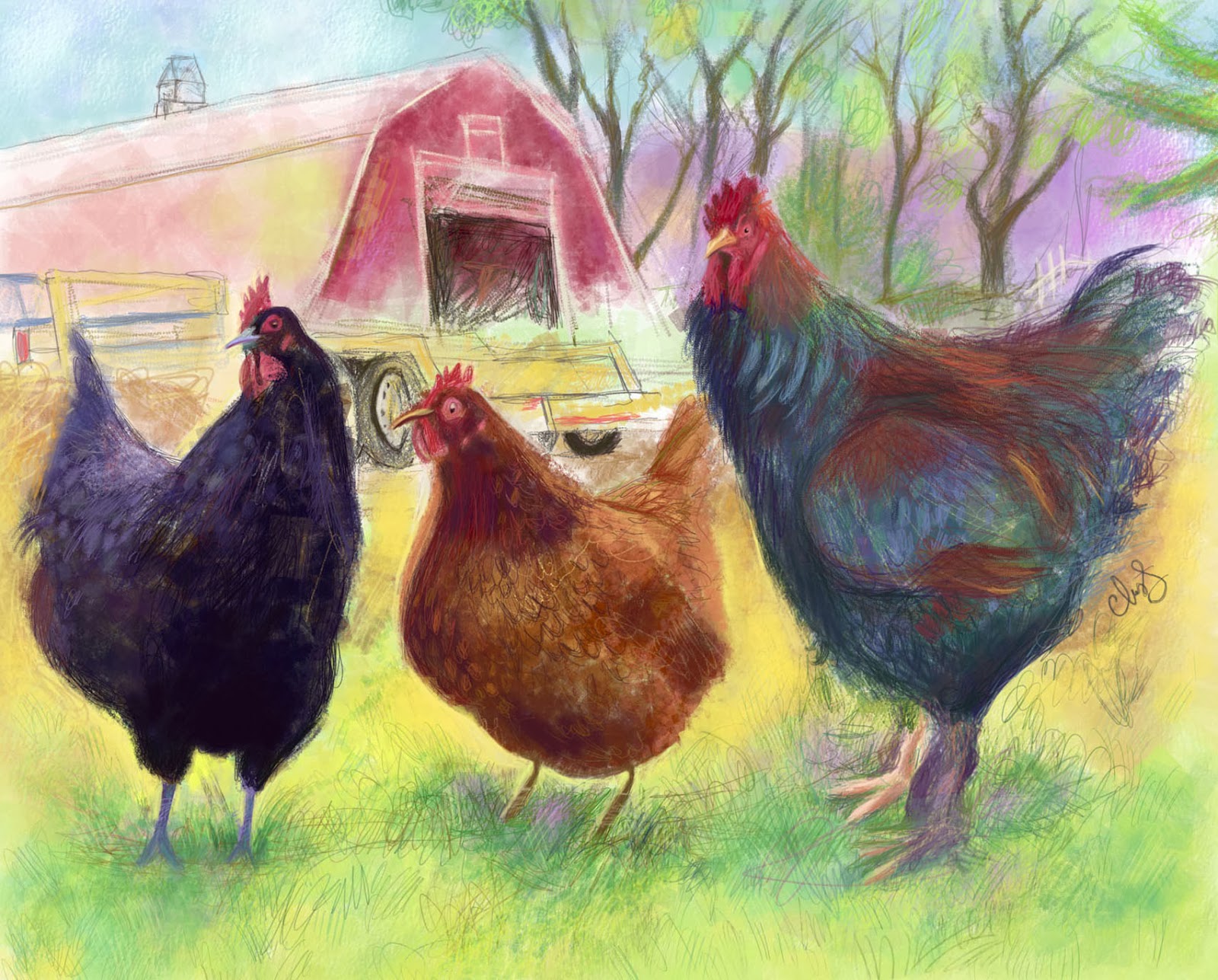
I recently stumbled upon these lovely illustrations by Jana Christy. Sometimes keeping chickens can just be about the whimsy of it all. The shared quirks and joys of our unique animal husbandry. I love her work, it's playful, exaggerated and full of life. They are so pleasant to the eye, I could see them everyday with comfort and a smile. A really lovely collection of work. You can visit her blog here: Jana Christy's Blog. It's nice to see some really nice illustrations that relate to both children and the child within! Enjoy!


Three Chickens by Jana Christy
Speckled Sussex by Jana Christy
Black Copper Maran(s) by Jana Christy
(She forgot the 'S' classic Marans error)
Rhode Island Red by Jana Christy
Buff Orpington by Jana Christy
Wyandotte by Jana Christy

Wednesday, October 9, 2013

Autumn and Chickens

It’s autumn, one of the most cherished times of the year, aside from spring, and summer and winter. I love the seasons all year round, but there is something about the warmth, colour, contrast and change that fall brings. So far our fall here in southern Ontario has been very sunny, warm, and relatively dry. I’ve harvested most of the vegetables in the garden and laid new bulbs to rest, until they awaken in the new light of spring. 

Fall is the perfect time to finish what you started in the spring and summer. For me that means getting up even earlier to saw wood and paint my coop and run extension. Its perfect weather for this, its still warm enough to work outside without dying of heat exhaustion or freezing your fingers off. For chicken keepers, fall is when you make some choices before winter sets in. If you have a large number of birds (like me), its time to decide who gets sold or well... processed.
Beautiful light, and lazy afternoon sunflower treats, what a great idea!
Depending on the size of your coop, you need to think about warmth. Chickens will roost together and stay relatively warm at night, but as temperatures plummet at night, its important to think about adding additional heat, insulation and fatty foods that will help elevate body temperature. 

If you like to rake your leaves, I recommend dumping them in the chicken run! The chickens will love to scratch around, picking out the bugs, once the leaves break down you’ll have a new layer of compost between your girls and the years chicken waste. You can also remove this chicken-leaf mix and mulch it onto your gardens.
So much colour and contrast this time of year!
Planting bulbs is a big fall activity and don’t forget to plant daffodils around your run and coop! Daffodils naturally deter digging pests, such as skunks, possums, rats, squirrels and mice. You can buy bulk bushels online and plant them up until the first heavy frost. Its a beautiful solution from digging pests if you ask me. 

Keep and eye out for fall molting cycles and make sure your hens have all the nutrition they need to keep them happy and strong during these periods. Hens usually molt once a year in the fall and will stop laying during this time. Molting cockerels can be a sign of infertility or and stress induced molting can lead to infertility. After the molt, your birds will be twice as perky and beautiful as they were before.

Don't forget the pumpkin as a treat! Your chickens will love them!

Sunday, September 22, 2013

Order your turkey before its too late!

It's that beautiful time of year again, and it feels like it just smashed into our summer weather so suddenly! Fall, and the leaves are starting to turn and Canadian Thanksgiving is just around the bend. I may not raise or hatch turkey, but I do advocate for the ethical and natural rearing of other poultry breeds. I also like to encourage local agriculture and sustainable living. Order your turkey now before it's too late.


The best turkey you can feed your family is locally farm raised and grass fed turkey. Even "natural" or "organic" turkey can be kept in inhumane conditions as the rules of organic farming doesn't mean you're getting an ethical bird. As any backyard poultry farmer would know, our birds are happy little creatures who enjoy the freedom to eat grasses, bugs and explore. Even a meat bird deserves a quality life in order to provide quality meat to the consumer. Click the links below explore local turkey producers!

And many more! (Guelph - Wellington Area)

Wednesday, September 18, 2013

Discover Magazine: Article On Blue Eggs!

Discover magazine posted an article on why some eggs are blue! Turns out its caused by a virus that has inserted itself into the ancestral DNA of blue egg laying breeds! Read more here at Discover Magazine. Not that I'm for genetic alteration of the unnatural kind, but does this mean we can create new egg colour intensities and possibly new colors in chicken eggs? What does this mean for olive eggers? This is so interesting!

Click here for the Article!

Tuesday, September 17, 2013

What NOT to feed your flock!

I've had lots of questions about how to feed chickens, what they can or cannot eat, so I'm devoting the next bunch of posts to strictly-feeding! First and foremost I thought I would cover the serious what not to feed your birds and move into more advanced tips and tricks in later posts. I could literally write a book on feeding birds (Ou, now that's an idea!).

Let's get started... many things with feeding chickens are no brainers, but other items on this list my shock you, that's why its important to read-up and do your research before start feeding them potentially poisonous treats. I thought about making a top-ten list, but these are all very bad for your birds and should not be taken lightly.

Some "no brainers" are; Alcohol or tobacco products. Human medicines, bio-degradable plastics and paper. They may seem silly, but people have fed these things to their birds. Some should probably reconsider keeping animals period.
Raw Potato Peels are toxic. Avocado skins and pits are toxic. Chocolate is also very toxic. Junk food has a high fat and salt content, non of which are good for these small creatures.

Moldy foods, you may have heard they are OK to feed to your chickens, but unless you're a mold expert, you never know what spores or toxic molds might harm your chickens. Sugar is just bad, it elevates the blood sugar and gets the heart racing a dangerous levels. Garlic and onions can effect the egg taste as well as be toxic. Raw meat, just don't, there's a high risk of bacteria, smell and food poisoning.
Salty foods can make your birds sick. Your average garden clippings can contain toxic or poisonous plants that your birds wouldn't know better then to eat. Feeding raw eggs may cause your birds to eat their own eggs as they now see them as a food source. Be mindful to crush up any egg shells into tiny tiny pieces before feeding back to your flock. Feeding raw beans can be dangerous because they can expand while being digested.

Other unwelcome items include:
Banana and citrus peels, certain flowers, parsley, anything really spicy, dried fruit, sugary cereal, be careful with some wild bird seeds, cheeses, raw rice and raw pasta. Feed scratch corn only in the winter months as it elevates their body temperature, avoid in warm months. Some people like to feed cooked meats and even cooked chicken... but this seems really messed up and cannibalistic.

For more information on what not to feed chickens, check out your local library for a nice big book on chickens or a credible web site, like a University's agricultural department.

Another thing to keep in mind that uneaten kitchen scraps in your coop may start to smell and get moldy, so be sure to remove uneaten waste and clean regularly, food might collect droppings and birds will eat and track around. Extra waste may also attract pests and predators.